Row-level security, semantic layer design, consistent metrics, and organizational standards that make your reports trustworthy and scalable.
80% of Power BI implementations fail to deliver lasting value - not because of bad dashboards, but because of missing governance. Without it, different teams report different numbers, trust erodes, and the platform becomes a liability.
Governance isn't bureaucracy. It's the foundation that makes analytics trustworthy, scalable, and AI-ready. It's what separates dashboard shops from strategic analytics platforms.
Radiant Data Solutions designs Power BI governance frameworks that create trust, consistency, and scalability. We implement row-level security, semantic layer standards, certification workflows, workspace policies, and audit logging - transforming your Power BI environment from ad-hoc reports into a governed analytics platform.
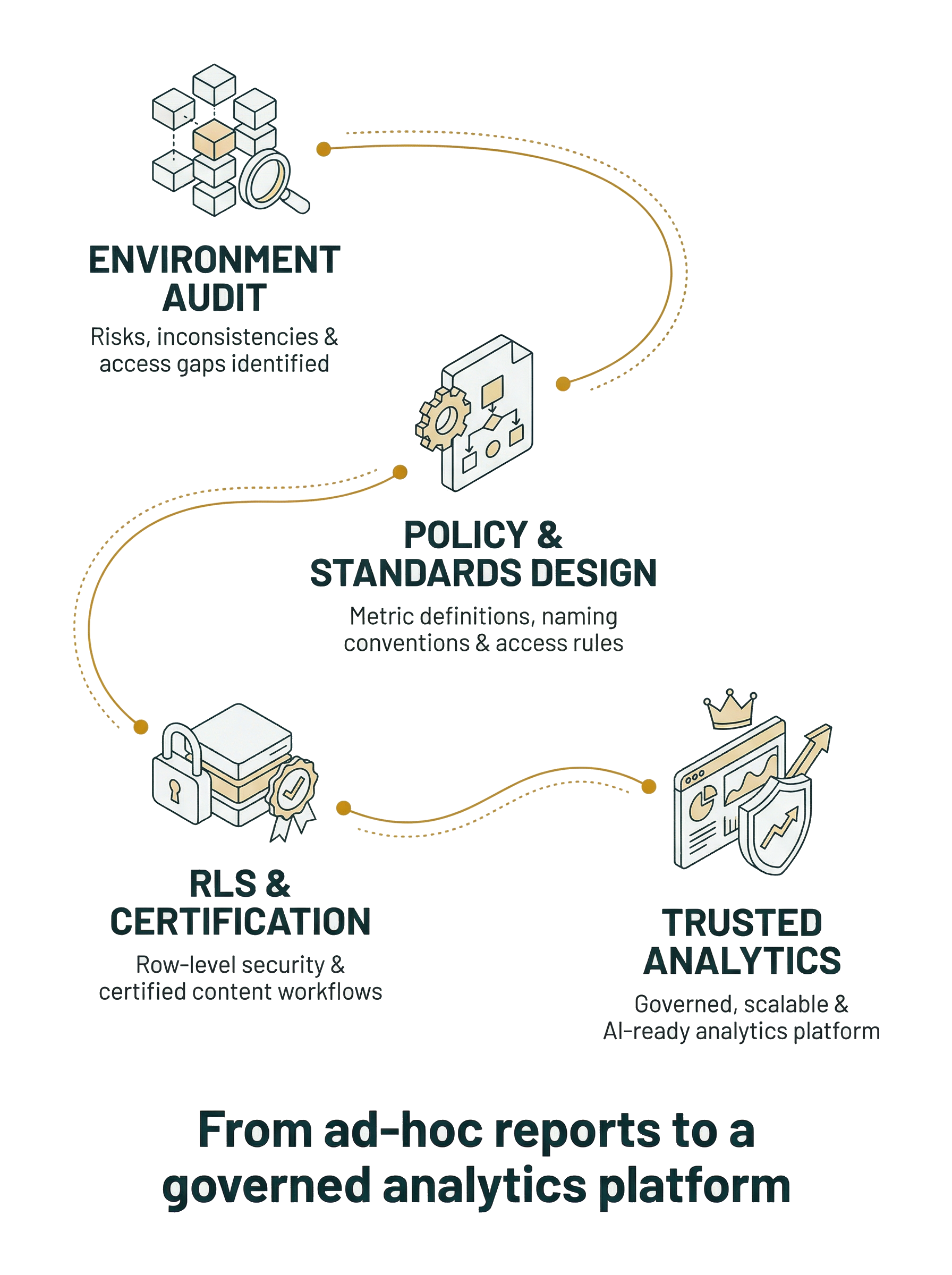
We design governance frameworks that create trust, consistency, and scalability across your Power BI environment.
Why It Matters: Governance enables scale without chaos. It's the difference between 5 reports and 50 reports - all showing the same numbers, all trusted by leadership, all supporting AI and advanced analytics.
Power BI governance covers security (RLS, workspace policies), consistent metric definitions, naming standards, deployment pipelines, content lifecycle management, and adoption strategy. It's the framework that makes analytics trustworthy at scale.
Not at all. Most of our clients come to us after their environment has grown organically. We assess what's in place, identify gaps, and implement governance without disrupting active reporting.
AI tools like Copilot require clean, well-structured data with consistent definitions. A governed semantic layer is the prerequisite for reliable AI-generated insights. Without it, Copilot gives unreliable answers.
Row-Level Security (RLS) ensures users only see data they're authorized to access - without building separate reports. It's essential for multi-department and multi-location organizations.
Key indicators include: consistent numbers across reports, reduced ad-hoc data requests, faster report development, clear ownership, and executive confidence in the data. We establish baseline metrics during discovery.